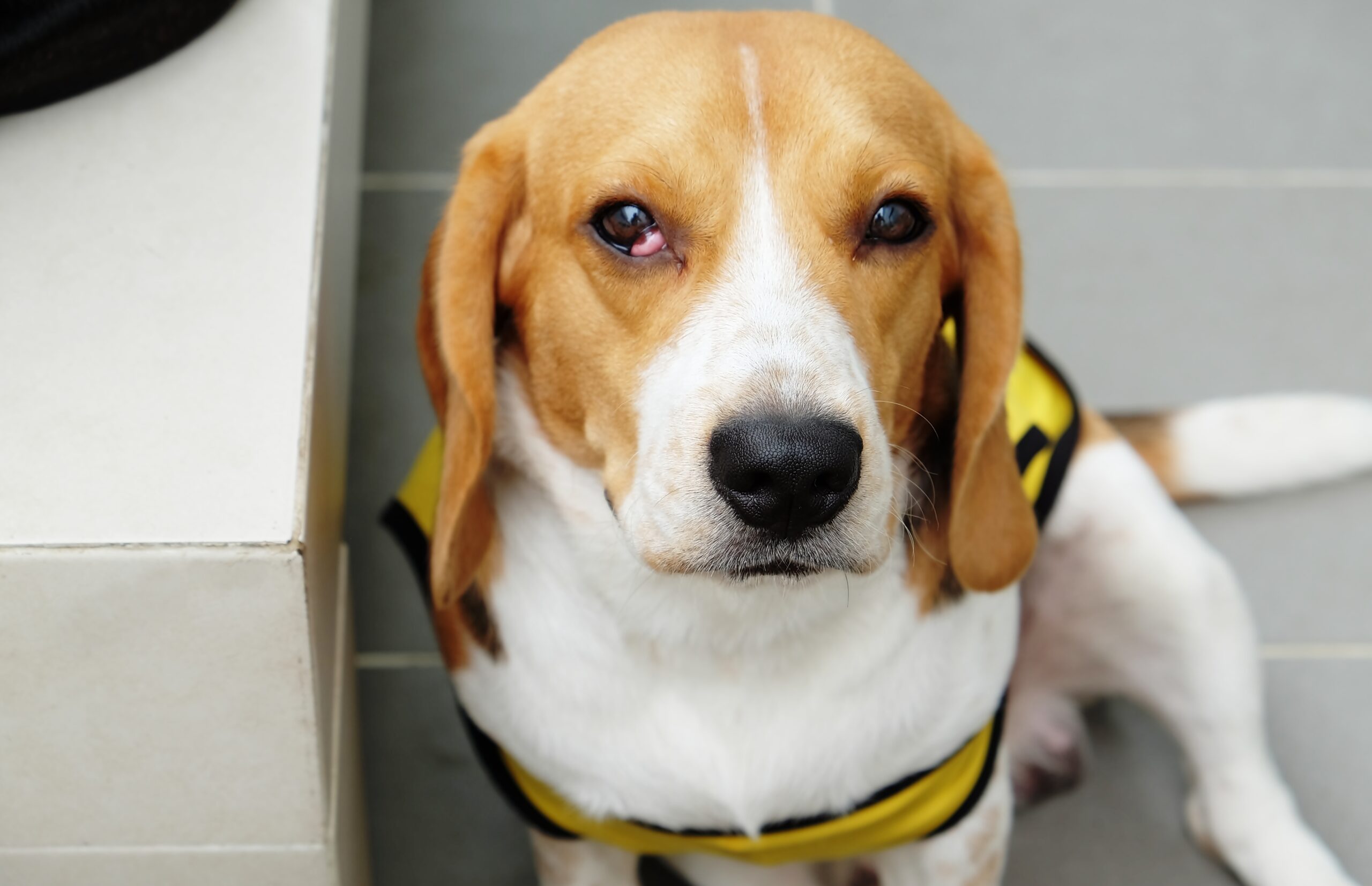
Cherry eye occurs when the gland of the third eyelid becomes displaced and appears as a red or pink mass in the corner of the eye.
Although the condition may initially look like a minor irritation, the third-eyelid gland plays an important role in maintaining the eye’s tear film.
What Is Cherry Eye?
The third eyelid contains a tear-producing gland that normally remains tucked into its proper position.
When the tissue supporting the gland becomes displaced, the gland can protrude and become visible.
This is commonly called cherry eye.
What Does Cherry Eye Look Like?
Signs may include:
- A red or pink mass in the corner of the eye
- Eye redness
- Irritation
- Discharge
- Rubbing or pawing at the eye
If your dog develops a new mass or swelling around the eye, it should be evaluated by a veterinarian.
Can Cherry Eye Go Away on Its Own?
Cherry eye may occasionally change in appearance or temporarily become less prominent, but this does not mean that the underlying problem has been corrected.
The displaced gland remains at risk of irritation and inflammation.
Why Is the Gland Preserved?
The third-eyelid gland contributes to tear production.
Because of this important function, treatment is generally aimed at preserving and repositioning the gland rather than removing it.
Removing the gland can increase the risk of inadequate tear production and dry eye.
Surgical Repair
Surgical repair is the treatment provided by AZ Vet Direct for appropriate cherry-eye patients.
The goal is to return the gland to its normal position and secure it so that it can continue performing its normal function.
There are several surgical techniques used to repair cherry eye. The appropriate technique depends on the individual patient and the veterinarian’s assessment.
What About Eye Drops?
Eye drops or medications may sometimes be used by a veterinarian for specific eye conditions or to manage irritation, but they do not replace surgical correction of a displaced third-eyelid gland.
Pet owners should not attempt to treat a cherry-eye mass with medications without veterinary guidance.
Recovery After Cherry Eye Surgery
After surgery, dogs need to be prevented from rubbing or scratching at the affected eye.
Postoperative instructions may include:
- Use of an e-collar
- Activity restriction
- Prescribed medications
- Monitoring the eye for swelling or discharge
- Follow-up as directed
Contact your veterinary team if you notice significant swelling, worsening redness, discharge, bleeding, or other concerning changes.
Cherry Eye Surgery at AZ Vet Direct
AZ Vet Direct provides surgical cherry-eye repair for appropriate canine patients.
Our goal is to preserve the third-eyelid gland and restore it to its proper position.
If your dog has a red or pink mass in the corner of the eye, a veterinary evaluation can determine whether the problem is cherry eye and whether surgical repair is appropriate.
Signs to Watch For:
- Red, swollen mass in the corner of the eye that looks like a cherry pit
- Excessive tearing or discharge from the affected eye
- Pawing or rubbing at the eye due to discomfort
- Visible third eyelid that appears larger than normal
- Changes in eye appearance or vision
- Squinting or keeping the affected eye partially closed
Cherry Eye Surgery for Dogs
Cherry eye surgery involves repositioning the prolapsed gland and securing it back in its normal anatomical position. This procedure is considered the gold standard treatment because it preserves the tear-producing gland while preventing future prolapses. Veterinarians typically recommend surgery when conservative treatments fail or if the condition is severe.
What to Expect During Surgery:
- Pre-surgical examination and blood work to ensure your dog is healthy enough for anesthesia
- General anesthesia administration and monitoring throughout the procedure
- Surgical repositioning of the gland using one of several techniques (pocket technique, imbrication, or anchoring)
- Recovery period lasting 1-2 hours post-surgery
- Post-operative care including medication and follow-up visits
Other Treatment Options for Cherry Eye in Dogs
Manual Reduction
Manual reduction involves gentle massage of the prolapsed gland back into position. Your veterinarian can demonstrate the proper technique, which may provide temporary relief. However, success rates vary, and the gland often prolapses again without surgical correction.
Warm Compress Therapy
Applying warm compresses to the affected eye can help reduce inflammation and provide comfort. Place a clean, warm (not hot) compress on the eye for 5-10 minutes, several times daily. This treatment works best when combined with other conservative measures.
Topical Medications
Anti-inflammatory eye drops or ointments prescribed by your veterinarian can help reduce swelling and discomfort. These medications may include steroids or lubricating agents to protect the exposed gland tissue and prevent infection.
Lifestyle Modifications
Creating a calm environment and limiting activities that increase eye pressure can help manage symptoms of cherry eye in dogs. This includes:
- Avoiding tight collars or excessive pulling during walks
- Keeping the eye area clean and protected
- Reducing exposure to irritants like dust or wind
Natural Remedies
While scientific evidence is limited, some pet owners report success with natural anti-inflammatory supplements and herbs. Always consult your veterinarian before trying any alternative treatments, as they may interact with other medications or be inappropriate for your dog’s specific condition.
Remember that while non-surgical treatments may provide temporary relief, they rarely offer a permanent solution for cherry eye in dogs. Close monitoring and regular veterinary check-ups are essential to ensure your dog’s eye health isn’t compromised while trying conservative management approaches.
Making the Decision: Cherry Eye Surgery vs Non-Invasive Treatment
When dealing with cherry eye in dogs, consulting a qualified veterinarian is your crucial first step for developing an effective treatment strategy. Your veterinarian brings specialized expertise in evaluating factors like your dog’s age, overall health condition, and the severity of the prolapse – all critical elements in determining whether surgery or conservative management would be most beneficial. Additionally, they’ll provide ongoing monitoring to ensure the chosen treatment remains effective and can quickly adjust the approach if your pet’s condition changes.
Cherry Eye Surgery: Benefits and Limitations
Benefits
- Permanent solution: With success rates exceeding 90% when performed by experienced veterinarians, surgery offers a lasting fix for cherry eye in dogs
- Gland preservation: The surgical technique maintains proper tear production by repositioning and securing the gland in its natural location
- Long-term health protection: By restoring normal anatomy, surgery helps prevent complications like chronic dry eye and recurring infections
- Minimal aftercare: Once healed, most dogs require no special ongoing treatment beyond routine eye care
- Cost-effective over time: Despite higher initial costs, surgery typically proves more economical than years of non-surgical management
Limitations
- Anesthesia requirements: Some dogs, particularly seniors or those with health issues, may face increased risks from general anesthesia
- Significant upfront investment: Surgical costs can range from $800-$2,000 depending on location and specific procedure needs
- Initial recovery period: Your dog will need 2-3 weeks of careful monitoring and restricted activity during healing
- Surgical risks: While uncommon, possibilities include infection, suture reactions, or incomplete gland repositioning
- Post-operative care: You’ll need to prevent your dog from scratching the surgical site and administer prescribed medications
Non-Invasive Treatment: Benefits and Limitations
Benefits
- Immediate start: Treatment can begin as soon as the cherry eye is diagnosed, without surgical preparation
- Anesthesia-free: Perfect for dogs who aren’t good surgical candidates due to age or health concerns
- Budget-friendly initially: Starting costs are significantly lower than surgery
- Adjustable approach: Treatment plans can be easily modified based on your dog’s response
- Home management: Many treatments can be administered in the comfort of your home
- Reversible options: If one approach isn’t working, you can easily try alternative methods
Limitations
- Short-term effectiveness: Most non-surgical treatments provide only temporary improvement
- Daily commitment: Success requires consistent application of prescribed treatments
- Ongoing expenses: Regular veterinary check-ups and medication refills can become costly
- Progressive deterioration: Without permanent gland repositioning, the condition often worsens over time
- Limited success rate: Some cases of cherry eye in dogs simply won’t respond to conservative treatment
- Risk of complications: Delayed surgical intervention may lead to chronic eye problems
Conclusion
Making the right choice between surgical and non-surgical treatment for cherry eye in dogs requires careful consideration of multiple factors, including your pet’s specific condition, your financial resources, and your ability to manage ongoing care. While non-surgical approaches offer valuable temporary relief and may be appropriate in certain situations, they rarely provide the lasting resolution that surgery can achieve.
Remember that there’s no one-size-fits-all solution – the best treatment plan for your dog will depend on their individual circumstances and needs. Work closely with your veterinarian to monitor progress and adjust strategies as needed, keeping in mind that early intervention typically leads to better outcomes regardless of the chosen treatment path.