
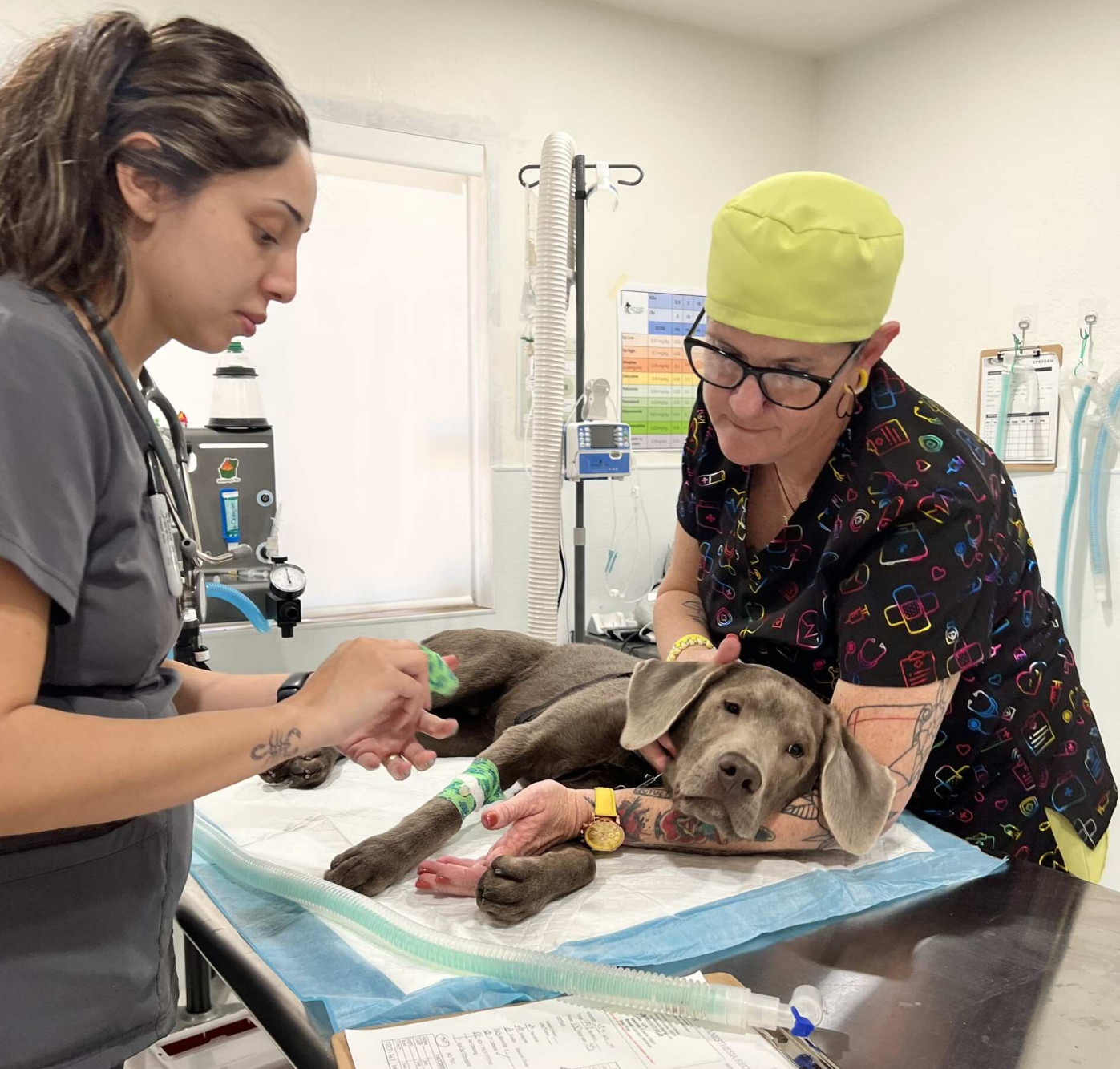
If your pet needs a surgery that requires anesthesia, it is normal to have questions. What happens after you leave them with the veterinary team? How are they monitored? What happens once the procedure is over? Anesthesia requires careful preparation, continuous monitoring, pain management, and recovery care from beginning to end. Our team of experts are specifically trained to handle pets under the influence of anesthesia. Here is a look at what happens during the process.
- An IV Catheter Helps Provide Access to Your Pet’s Circulation
Before your pet even experiences anesthesia, an IV catheter is placed to provide direct access to their vein. This allows for our team to administer any medications and fluids that might be necessary during the procedure. The IV allows for immediate access to the circulatory system if quick action needs to be taken.
It acts as a reliable way for us to support your pet during surgery.
- Monitoring Equipment Keeps Track of Your Pet Throughout the Procedure
Once your pet is under anesthesia, the monitoring doesn’t stop.
Our team uses monitoring equipment to keep track of things such as:
- Heart rate
- Respiratory rate
- Oxygen levels
- Blood pressure
- Body temperature
- Carbon dioxide levels
This allows for our team to understand how your pet responds to anesthesia and allows us to make quick adjustments when needed. We do not simply administer anesthesia and forget about your pet, they are monitored by at least one member of our team at all times.
- Pain Management Is Part of the Plan
Your pet’s comfort is our first priority and part of their surgical plan. Pain management can involve other medications in addition to anesthesia, during or after your pets surgery. Our goal isn’t simply to perform the surgery, it is to help your pet remain as comfortable as possible before, during and after.
Your pet’s medical team might run through different techniques and medications to help keep your pet comfortable after their surgery.
- Recovery Monitoring Is Just as Important
Anesthesia doesn’t end when the surgery does. As your pet wakes up, our veterinary team monitors them closely. We keep an eye on their heart rate, their breathing, temperature, and comfort level as the effects of anesthesia wear off.
Each pet responds to the medication differently. Some pets might be groggy after surgery, others might get anxious or nervous after waking up and feeling the effects. Our team is trained to handle all situations and we use the recovery period to monitor their reaction before clearing them to return home.
Each Part of Anesthesia Has A Purpose
From placing an IV catheter to monitoring vital signs, managing pain, and watching your pet during recovery, anesthesia involves many steps designed around your pet’s individual needs.
When your pet needs surgery, it’s understandable to focus on the procedure itself. But there’s an entire team and process working behind the scenes to help keep them monitored, comfortable, and supported throughout their care.
If your pet has an upcoming procedure, don’t hesitate to ask your veterinary team what anesthesia and monitoring will look like for them. Understanding the process can make the experience a little less stressful for both of you. 🐾