
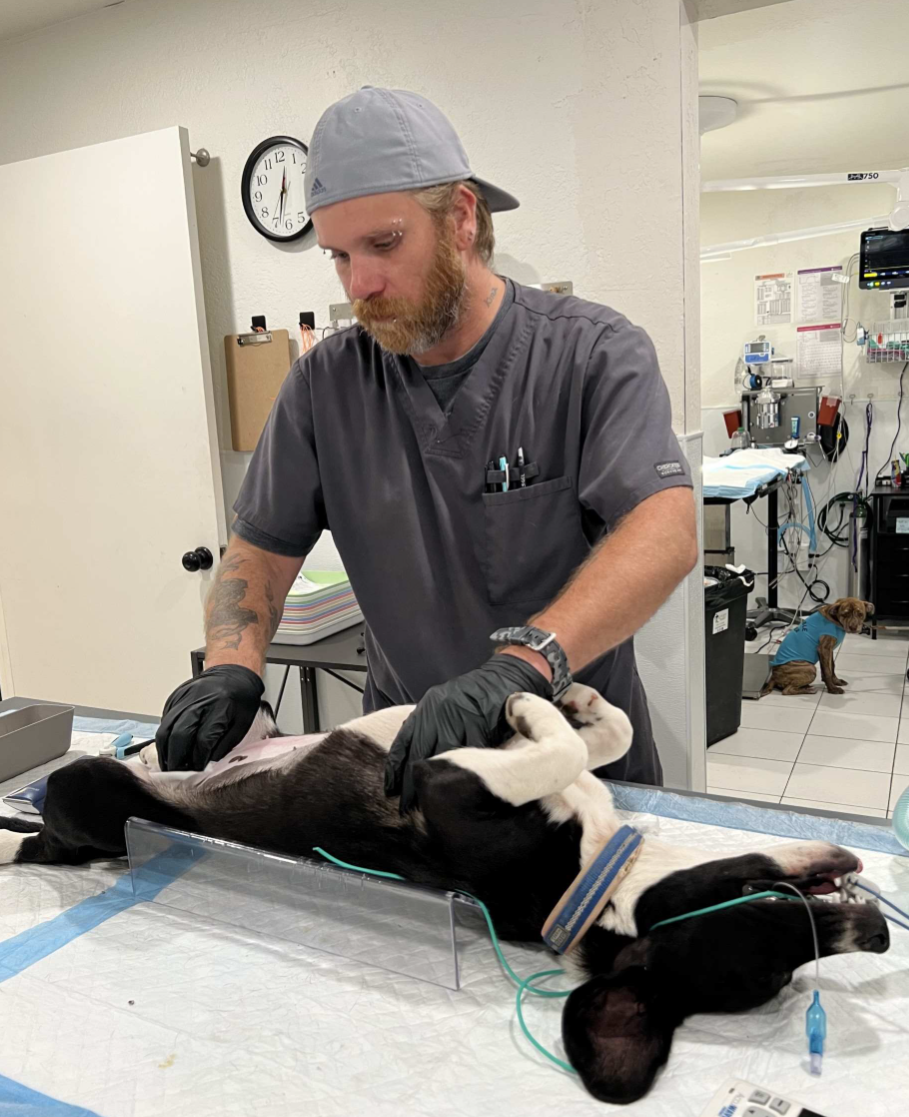
No pet owner wants to hear that their dog, cat, or rabbit needs surgery. Whether it is a routine spay/neuter, or a more advanced mass removal, it is completely normal to have questions. The good news is, even the slightest preparation can go a long way. Understanding what to expect before, during and after the surgical procedure can help reduce stress for you and your pet. Here’s everything you need to know to prepare your pet and your home for surgery to help support a smooth recovery.
Before Surgery: Your Pet’s Health Comes First
Well before our doctor picks up any surgical instruments, we make sure your pet is healthy enough for anesthesia and surgery.
Prior to surgery, our veterinary team will:
- Perform a physical examination
- Review your pet’s medical history
- Discuss any current medications
- Answer your questions
- Recommend pre-surgical bloodwork if appropriate
This portion of your pet’s appointment is a great opportunity for you to discuss any possible concerns you might have so you feel completely comfortable moving forward with your pet’s procedure.
Why Is Fasting So Important?
One of the most common recommendations prior to surgery is fasting. This is a seemingly small step that is very important for safety during surgery.
During surgery, the body’s swallow and gag reflexes are temporarily reduced. If food and water are still in the stomach, there is an increased risk of the stomach regurgitating it and accidentally entering the lungs.
It is highly recommended to follow your veterinarian’s fasting instructions to help make anesthesia as safe as possible for your pet.
Why Pre-Surgical Bloodwork Matters
While many pets seem perfectly healthy on the outside, underlying health issues could still be causing pain and other concerns that are not visible during a physical exam.
Pre-surgical bloodwork can help your veterinarian evaluate your pet’s overall health before anestasia.
Bloodwork can provide important information about:
- Liver function
- Kidney function
- Blood sugar levels
- Red and white blood cell counts
- Hydration status
- Signs of infection or inflammation
This information can help your veterinary team develop the safest anesthesia and treatment plan for your pet. We require pre-surgical bloodwork for pets over the age of 5 to ensure we handle your pet with the greatest level of care they deserve.
What to Bring on Surgery Day
Preparing for your pets surgery day beforehand can help make the day a lot less stressful. Before you leave home make sure you have:
- Any medications your pet is currently taking (or a list of them)
- Questions you’d like answered before the procedure
- A secure leash or carrier
- Emergency contact information
- Any required paperwork or medical history
Leaving early to allow yourself a few extra minutes at check-in can help so you don’t feel rushed.
What to Expect During Check-In
When you arrive, a member of our veterinary team will greet you and walk you through the check-in process.
- Review your pet’s medical history
- Confirm fasting instructions were followed
- Discuss the planned procedure
- Review and sign consent forms
- Verify the best phone number to reach you during the day
- Have any remaining questions answered
Once your pet is admitted, our team will begin prepping them for surgery. From that moment, our team treats your pet with extreme care with their safety and well-being as our top priority.
Preparing Your Home For Recovery
A calm recovery begins before your pet comes home. Creating a calm and comfortable space for them can make the transition much easier.
Consider preparing:
- A quiet place to rest away from other pets and children
- Fresh bedding
- Easy access to food and water
- A plan to limit running, jumping, and rough play
Depending on the procedure, your veterinarian might also recommend an e-collar or other recovery equipment to help protect the surgical site.
Follow your veterinarians discharge instructions carefully to best support your pet during their recovery.
We’re Here Every Step of the Way
We understand surgery can feel overwhelming, but you do not have to navigate it alone. Our team is committed to providing expert and compassionate care. No question is too small, we’re here to make sure you feel confident and informed every step of the way.
Call us today at 480-712-3600 to learn more about our surgical services. 🐾